
QPS Fledermaus is a powerful 3D geospatial visualization and bathymetric analysis software designed for hydrographic surveying, marine engineering, oceanographic research, and seabed mapping. Trusted by professionals worldwide, Fledermaus enables users to visualize, analyze, and present complex multibeam sonar, LiDAR, point cloud, and geospatial datasets in an immersive 3D environment. With advanced rendering, data processing, profiling, and measurement tools, QPS Fledermaus helps organizations improve decision-making, streamline survey workflows, and gain deeper insights into underwater and terrestrial environments…
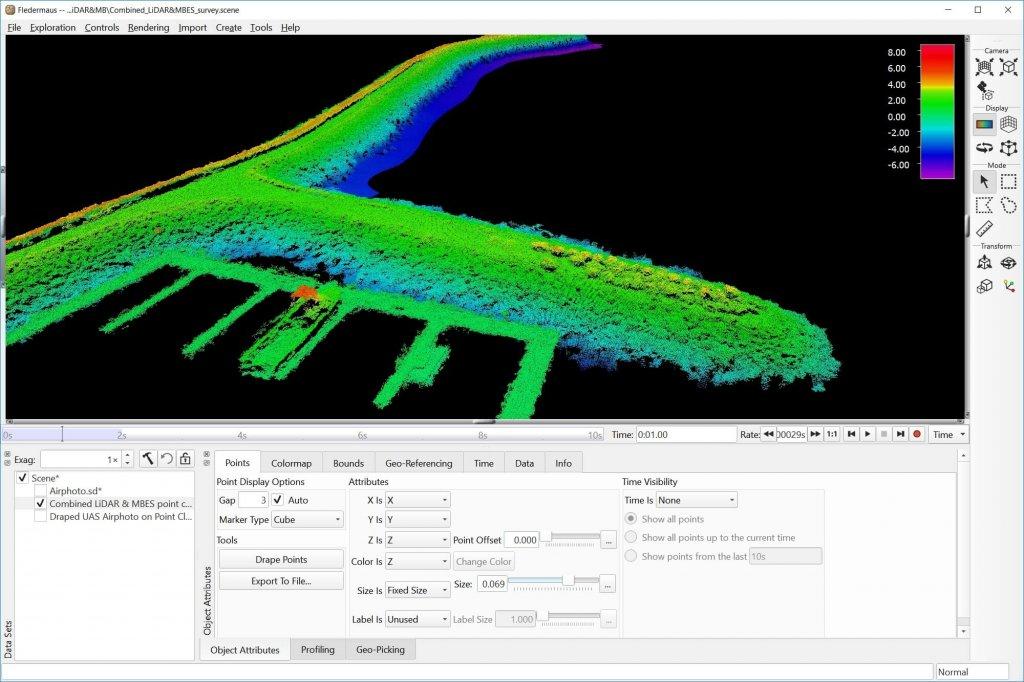
QPS Fledermaus 8.9.0 – Professional 3D Geospatial Visualization, Bathymetric Analysis & Hydrographic Survey Software
Explore the Underwater World with Industry-Leading 3D Visualization Technology
QPS Fledermaus 8.9.0 represents the latest evolution of one of the most respected 3D geospatial visualization platforms available for hydrographic surveying, bathymetric analysis, marine engineering, oceanographic research, offshore energy development, coastal management, and underwater infrastructure inspection. Trusted by government hydrographic offices, naval organizations, offshore survey contractors, scientific institutions, and engineering firms around the globe, Fledermaus transforms complex geospatial datasets into immersive and highly interactive 3D environments.
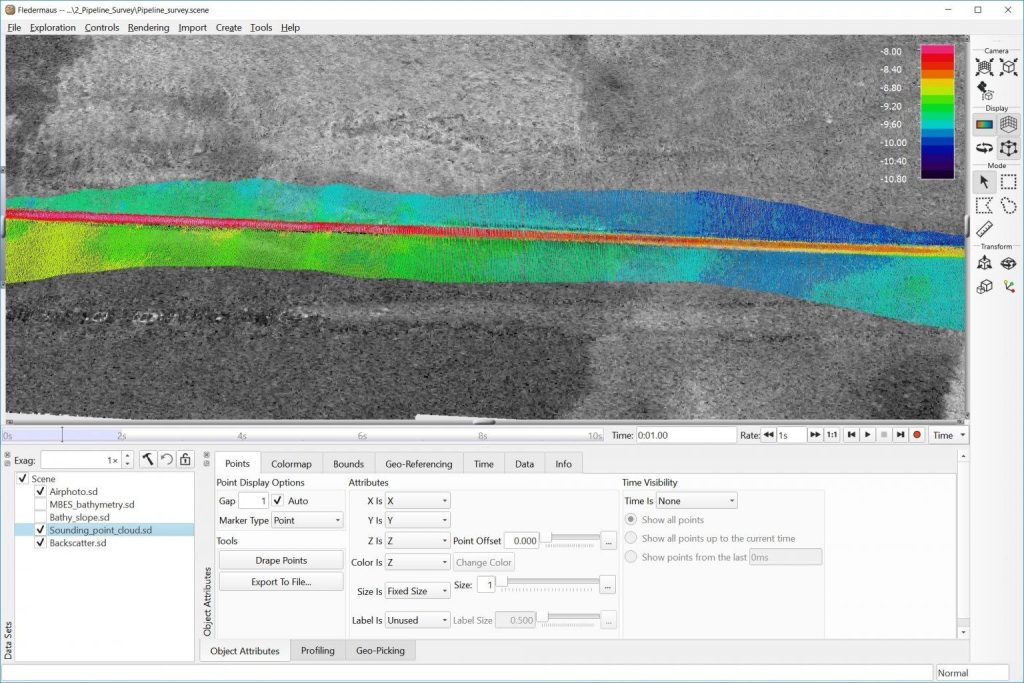
Designed to simplify the interpretation of massive survey datasets, Fledermaus enables professionals to visualize multibeam sonar surveys, LiDAR scans, point clouds, terrain models, geological structures, underwater assets, and environmental data within a single powerful workspace. Its advanced rendering technology provides unmatched visual clarity while maintaining excellent performance even when handling extremely large datasets.
Whether you are conducting a seabed survey for offshore wind farm construction, analyzing dredging operations within a commercial harbor, planning submarine cable routes, investigating underwater geological formations, or presenting survey results to stakeholders, Fledermaus provides the tools needed to understand complex spatial information quickly and accurately.
Software Interface Overview
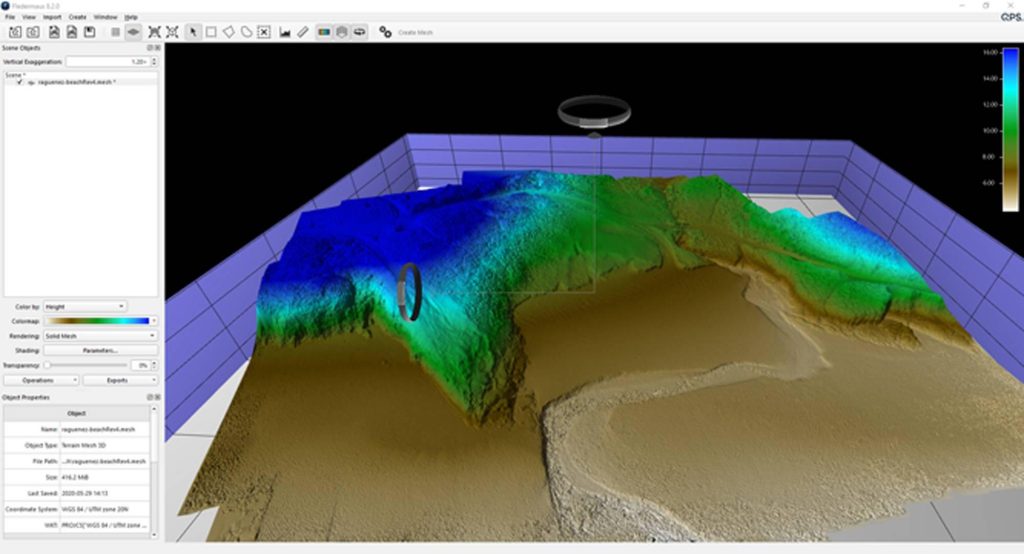
The primary workspace combines high-performance 3D rendering, layer management tools, navigation controls, project trees, and analytical functions into a streamlined professional environment.
Why QPS Fledermaus Is Considered the Industry Standard
For more than two decades, Fledermaus has helped revolutionize the way hydrographic and geospatial professionals interact with underwater and terrestrial survey data.
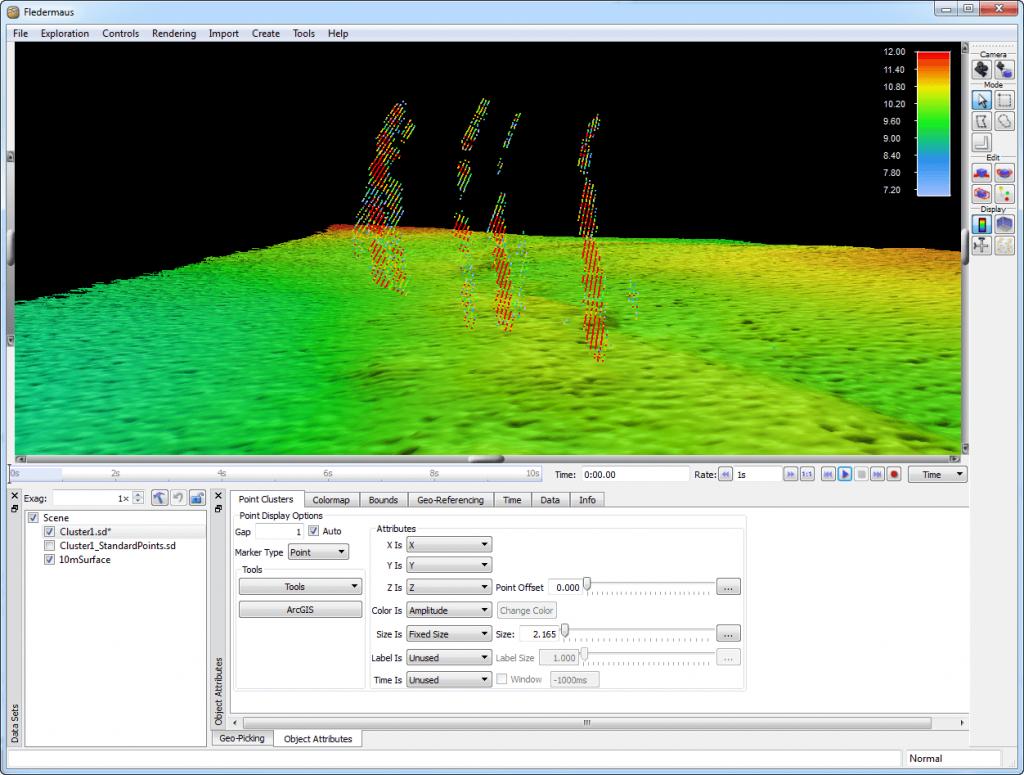
Unlike traditional 2D mapping software, Fledermaus allows users to literally “fly through” datasets, offering a realistic perspective of terrain, seabed morphology, underwater structures, and geological features.
Key Advantages
Real-time 3D visualization
Interactive geospatial analysis
Advanced bathymetric interpretation
Multibeam sonar integration
Massive point cloud support
High-resolution terrain rendering
Marine engineering project visualization
Geological and environmental analysis
Infrastructure inspection workflows
Survey quality control and validation
What’s New in QPS Fledermaus 8.9.0
The 8.9.0 release introduces important enhancements designed to improve productivity, engineering analysis, and project visualization.
Enhanced QGF Design Profiling Support
One of the most important additions in version 8.9.0 is expanded support for profiling QGF Design (.qgfdes) files.
This new capability enables engineers and surveyors to perform more detailed evaluations of design models directly within profiling workflows.
Benefits include:
- Faster design validation
- Improved survey-to-design comparisons
- Better dredging analysis
- Enhanced offshore construction planning
- More efficient engineering reviews
Users can now compare planned engineering surfaces against actual survey data with greater precision.
Improved Shapefile Label Visualization
Version 8.9.0 introduces support for displaying line labels from shapefiles directly inside the 3D environment.
This enhancement significantly improves:
- Route identification
- Navigation planning
- Pipeline visualization
- Cable route inspection
- Marine asset management
Survey teams can immediately identify key features without switching between multiple applications.
Optimized Rendering Engine
The visualization engine has been further refined to provide smoother interaction with large datasets.
Users will notice improvements when working with:
- High-density bathymetry
- Large point clouds
- Detailed terrain models
- Complex engineering projects
- Extensive LiDAR datasets
The result is faster navigation, improved responsiveness, and a more efficient user experience.
Powerful Bathymetric Analysis Capabilities
Bathymetric analysis remains one of Fledermaus’ greatest strengths.
Professionals can visualize underwater topography in exceptional detail while performing advanced analytical tasks.
Core Bathymetric Tools
- Surface analysis
- Depth profiling
- Volume calculations
- Terrain comparison
- Slope analysis
- Seafloor characterization
- Change detection
The software allows users to discover hidden patterns and features that would be difficult to identify using traditional 2D methods.
Advanced Point Cloud Visualization
Modern surveying generates enormous amounts of point cloud data.
Fledermaus 8.9.0 handles these datasets efficiently, allowing users to explore and analyze millions of points in real time.
Supported sources include:
- Airborne LiDAR
- Mobile LiDAR
- Terrestrial laser scanning
- UAV photogrammetry
- Multibeam echosounders
- Autonomous survey systems
Engineers and surveyors can evaluate structures, terrain, and environmental features with remarkable clarity.
LiDAR Integration for Coastal and Terrestrial Projects
Beyond marine applications, Fledermaus excels at visualizing terrestrial and coastal survey projects.
LiDAR datasets can be combined with bathymetric information to create seamless land-to-sea models.
Applications include:
- Coastal erosion studies
- Flood risk analysis
- Infrastructure planning
- Environmental monitoring
- Urban development projects
This integrated workflow provides a complete picture of project environments.
Marine Engineering and Offshore Construction
Offshore engineering projects require accurate visualization and detailed analysis.
Fledermaus assists project teams throughout the entire project lifecycle.
Typical Applications
- Offshore wind farms
- Oil and gas infrastructure
- Subsea cable installation
- Pipeline routing
- Port expansion projects
- Dredging operations
The software provides engineers with actionable insights that help reduce risk and improve project efficiency.
Geological and Oceanographic Research
Researchers use Fledermaus to study geological structures, ocean floor morphology, and environmental changes.
Common research applications include:
- Seafloor mapping
- Habitat classification
- Sediment transport analysis
- Geological fault interpretation
- Marine ecosystem monitoring
The immersive visualization environment helps scientists identify patterns that might otherwise remain hidden.
Improved Project Navigation and Data Exploration
The latest release continues to refine navigation tools for smoother interaction with datasets.
Features include:
- Dynamic fly-throughs
- Interactive camera controls
- Real-time rendering
- Layer management
- Object selection
- Annotation tools
These capabilities make data exploration intuitive and highly productive.
Performance Improvements in Version 8.9.0
QPS has implemented several optimizations focused on performance and reliability.
Enhancements Include
Faster project loading
Improved memory management
Better handling of large projects
Optimized graphics performance
Reduced processing delays
Enhanced rendering stability
Improved import workflows
Better compatibility across supported operating systems
These improvements ensure that professionals can work efficiently on demanding projects.
Stability Improvements and Bug Fixes
QPS Fledermaus 8.9.0 includes numerous corrections and maintenance updates designed to improve everyday usability.
Bug Fix Highlights
Improved application stability
Enhanced project reliability
Fixed visualization inconsistencies
Improved data import validation
Better layer handling
More reliable profile generation
Enhanced user interface responsiveness
Reduced unexpected interruptions
These fixes contribute to a smoother and more dependable production environment.
Integration with the Complete QPS Ecosystem
Fledermaus integrates seamlessly with the broader QPS product portfolio.
Compatible solutions include:
- Qinsy
- Qimera
- FMGT
- FMMW
- QPS Geodetic Package
This ecosystem enables efficient workflows from acquisition and processing through visualization and final reporting.
Organizations can move data seamlessly between applications without sacrificing quality or accuracy.
Interesting Facts About QPS Fledermaus
Did you know?
Fledermaus is used by hydrographic agencies worldwide.
The software supports some of the world’s largest seabed mapping projects.
Scientific institutions rely on Fledermaus for advanced oceanographic research.
It has been used extensively for underwater archaeology and marine habitat studies.
Major offshore energy companies use Fledermaus for subsea infrastructure planning and inspection.
These achievements have helped establish Fledermaus as one of the most trusted names in marine geospatial visualization.
System Requirements
Supported Operating Systems
- Windows 10 (64-bit)
- Windows 11 (64-bit)
- Modern Linux distributions
- Supported macOS versions
Minimum Requirements
- Multi-core processor
- 8 GB RAM
- OpenGL-compatible graphics card
- SSD storage
- 5 GB available disk space
Recommended Workstation Configuration
- Intel Core i7 / Intel Xeon / AMD Ryzen 7 or higher
- 16–32 GB RAM
- NVIDIA RTX or AMD professional graphics card
- Dedicated GPU memory
- NVMe SSD storage
- High-resolution monitor
For large bathymetric and LiDAR projects, workstation-class hardware is strongly recommended.
Why Upgrade to QPS Fledermaus 8.9.0?
QPS Fledermaus 8.9.0 delivers a powerful combination of advanced 3D visualization, enhanced profiling tools, improved shapefile support, performance optimizations, and increased stability. Whether your work involves hydrographic surveying, marine engineering, offshore construction, oceanographic research, LiDAR analysis, or point cloud visualization, Fledermaus provides the professional-grade tools required to transform complex geospatial data into actionable insights.
Experience faster workflows, deeper analysis, superior visualization quality, and greater project confidence with QPS Fledermaus 8.9.0—the industry-leading solution for 3D bathymetric and geospatial visualization.